
Solar Service & Repair in the Rio Grande Valley
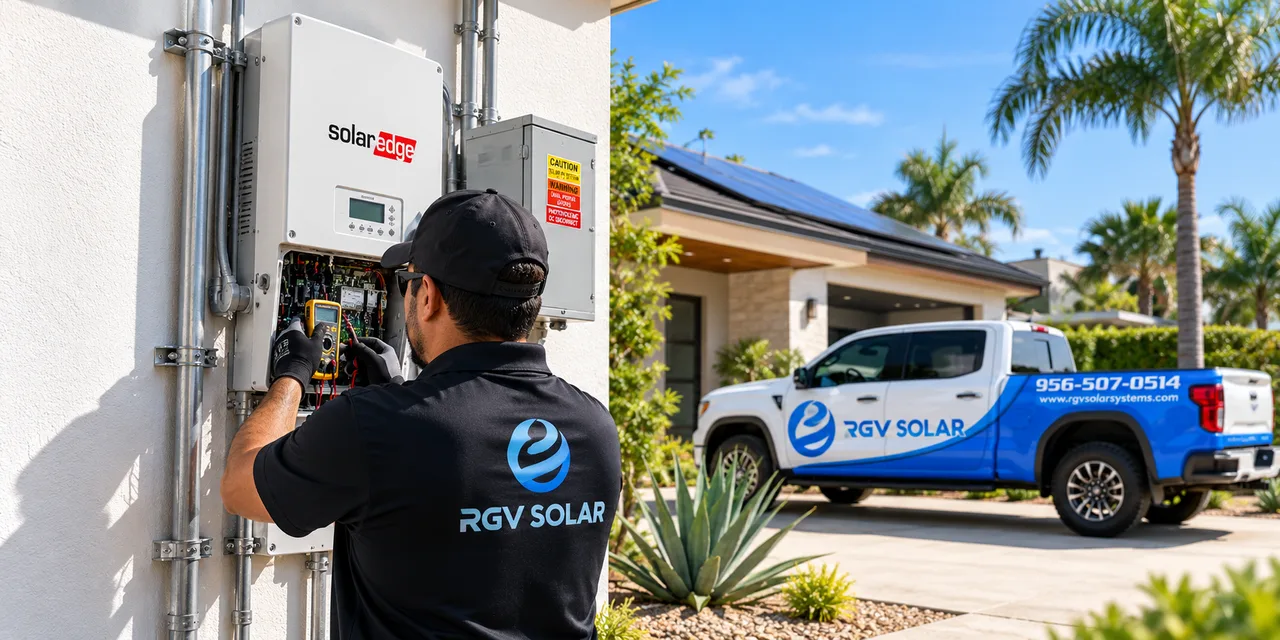
RGV Solar diagnoses and repairs solar systems across the Rio Grande Valley, including systems installed by other companies. We service SolarEdge, Enphase, SMA and Tesla equipment and work to restore monitoring when a system has stopped reporting.
- Energy
- RGV Solar Electric LLC
- TECL #37418
Understanding your options
A dashboard that stops updating is a reason to investigate, not proof that the panels have stopped generating. Internet equipment, communication paths, account permissions, and monitoring hardware can affect what you see. Electrical production needs its own assessment. Treat the date of the last reported reading as useful evidence while avoiding conclusions that the app alone cannot support.
Likewise, a higher electricity bill is not a diagnosis. Cooling demand, billing-period length, electricity-plan changes, export credits, clouds, shading, and seasonal daylight can all change the apparent result. Compare production over similar seasons and weather conditions, then consider how home consumption changed. A professional review uses the available history and site findings to determine which questions need testing, rather than assuming every bill increase requires an inverter replacement.
Repair planning should produce a defined problem, a supported recommendation, and a way to check the result. Monitoring restoration, an electrical repair, equipment replacement, and roof-access work are different scopes. Some issues may overlap, but they should not be bundled without explanation. Existing equipment compatibility, manufacturer procedures, permitting implications, and safe access determine the practical options; neither a remote screenshot nor an equipment brand can establish all of these.
What it costs in the Rio Grande Valley
Ask for an estimate that identifies the diagnostic visit, access assumptions, documentation, and authorization needed for additional work. Repair cost depends on what is found, the equipment involved, wiring condition, compatibility, and the actual labor scope. Manufacturer review may be relevant, but eligibility, labor coverage, shipping responsibility, and parts availability must be verified rather than assumed from the age or brand of the system.
Roof-related removal is a separate item. Detach and reinstall starts at $230 per panel, with the final scope affected by panel count, roof height and type, access, and hardware condition. This starting price is not a troubleshooting fee or a general repair rate. Compare proposals by what will be tested, repaired, documented, and excluded, and ask how newly discovered conditions will be presented before you authorize them.
A practical project plan
Record the observable symptom
Write down whether the app is offline, production appears reduced, an alert is present, or the concern began after another project. Include dates and screenshots where available. Describe what you observed rather than naming a failed component; the purpose is to help the technician choose the right assessment.
Review a meaningful baseline
Provide available production history and identify comparable seasonal periods. Include weather context, new shading, and significant changes in household use. Utility bills can add context, but changes in rates or consumption should not be mistaken for direct measurements of solar performance.
Confirm access and equipment
Gather model information, ownership records, previous service notes, and legitimate monitoring access. RGV Solar can review systems installed by another company, including when that company is unavailable. Missing credentials or records should be identified early so the required access process can be planned without casual password sharing.
Perform professional diagnostics
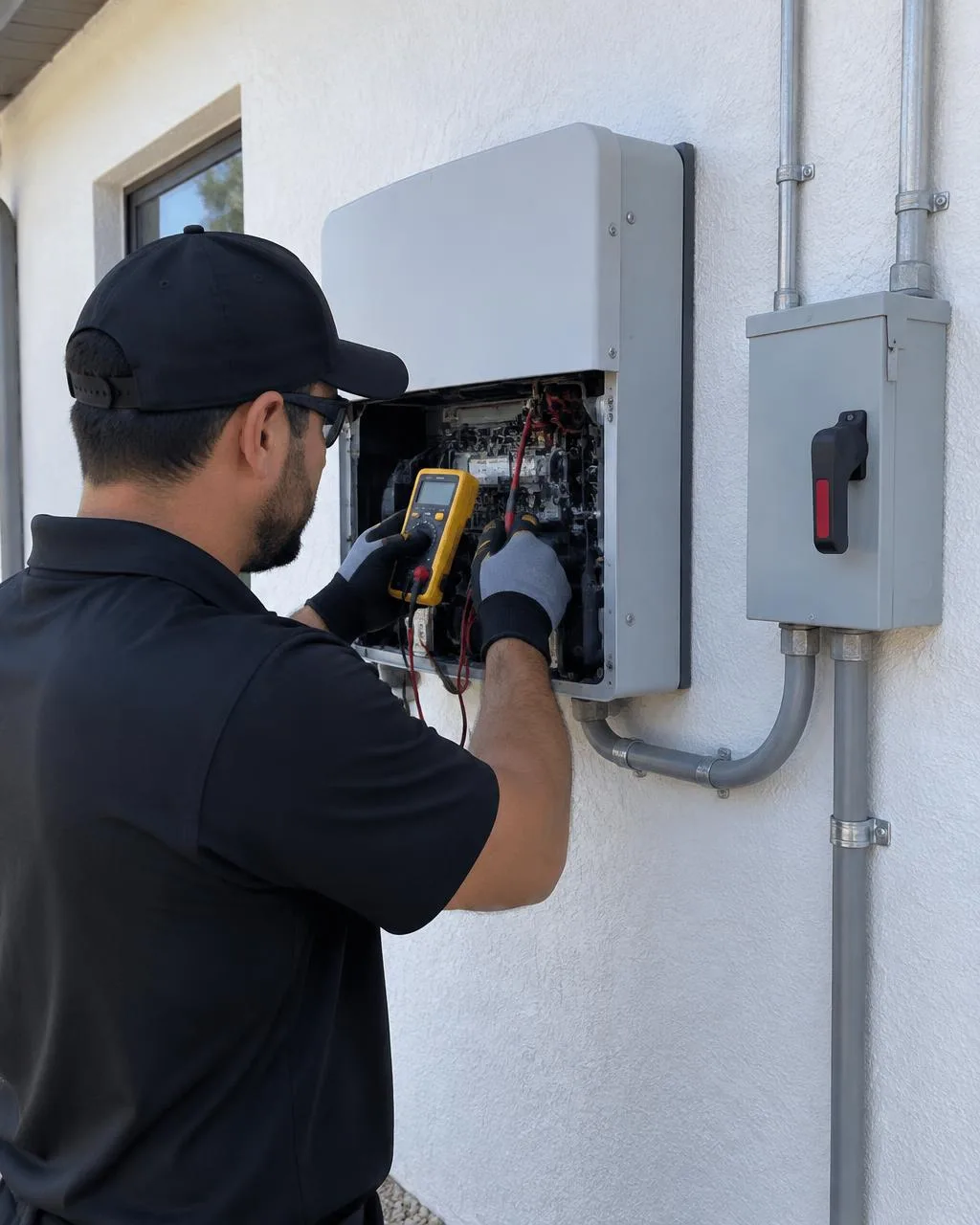
The service team distinguishes communication issues from production issues and checks the relevant equipment under appropriate safety procedures. The homeowner should not climb onto the roof, open an inverter or disconnect, or manipulate electrical equipment to assist. Request findings that separate confirmed conditions from questions still requiring investigation.
Evaluate the corrective options
Ask why the recommended work addresses the documented issue, what compatibility checks remain, and whether manufacturer review is involved. If replacement or a battery upgrade is proposed, compare that separate scope with repair rather than treating an upgrade as inevitable. Confirm any required approvals before modifying the installation.
Plan roof work when needed
For detach/reinstall, inspect production first, safely shut down, and label equipment for protected storage. Complete roof work before reinstalling with new flashing and mounts as appropriate and BRAND-NEW electrical wire, never reused wire. Include a production test afterward rather than assuming reassembly establishes operation.
Verify and document the outcome
Request the completed work description, relevant test results, monitoring status, and any unresolved limitations. Keep manufacturer correspondence and part information with the system record. Ask what future observations should prompt a service request without expecting a short test to guarantee production under every later weather condition.
Rio Grande Valley specifics
Valley heat and heavy cooling use can make bills rise even when solar equipment remains operational. Cloud patterns and daylight vary between seasons, so comparisons should account for both conditions and the period being measured. RGV Solar serves Hidalgo, Cameron, Starr, and Willacy counties, including communities from Mission and McAllen to Harlingen and Brownsville.
Storms and utility outages require careful interpretation. A grid interruption can affect system behavior without proving a component has failed, and standard grid-connected solar does not establish backup capability. Describe the timing of the outage, visible damage, and current alerts from a safe location. Service scheduling depends on safe access and conditions; hurricane exposure does not imply guaranteed immediate response. AEP Texas, Magic Valley Electric Cooperative and Brownsville PUB have different requirements. Confirm the utility serving your address before changing grid-connected equipment or service; routine like-for-like service does not automatically mean a new solar application.
When repair involves roof work in Cameron or Willacy County, review address-specific coastal windstorm requirements before covering work. Coordinate applicable Texas Department of Insurance inspections at the appropriate stage. Requirements should be confirmed for the actual project rather than treating every address or every repair as subject to an identical rule.
Why a licensed electrical contractor
RGV Solar Electric LLC holds TECL #37418 and has serviced and installed more than 400 systems. The team holds Tesla, SolarEdge, Enphase, and FranklinWH certifications and services SolarEdge, Enphase, SMA, and Tesla equipment, including other installers' systems. These qualifications support the service conversation but do not establish a diagnosis, equipment coverage, or part availability.
In-house roofing and solar capability can simplify responsibility when safe roof access or roofing repairs are part of the project. Written terms still matter: identify which work is included and which warranty applies. The three-year workmanship warranty is limited to RGV Solar detach/reinstall work, not all repairs, manufacturer equipment, or roof replacement. A roofer who is not a licensed electrician must not handle the solar electrical components; coordinate that work through the licensed electrical contractor.
Prepare for an assessment
Have the property location, equipment brand if known, symptom timeline, app screenshots, and available production history ready. Mention previous repairs and changes to the roof, internet connection, or electrical service. Ground-level photos are enough for an initial conversation; do not access the array or open equipment to obtain a better picture.
Arrange safe access to the work area, secure pets, and identify ownership or monitoring permissions that may be needed. Use private channels for documents and never post utility account numbers or passwords publicly. If you notice smoke, exposed damaged conductors, or another immediate hazard, move away and contact appropriate emergency assistance rather than waiting for routine troubleshooting. At our Mission showroom, you can see Powerwall, batteries and chargers and discuss future options without committing to an upgrade. Our Mission location also hosts Tesla demo drives; scheduling is through Tesla’s official drive page, separately from solar service.
Questions Valley homeowners ask
Related services and guides
Service in your city
Hidalgo County
Cameron County
Willacy County
Starr County
Reviewed by Isai Rodriguez, owner, RGV Solar Electric LLC (TECL #37418)
Last updated: