
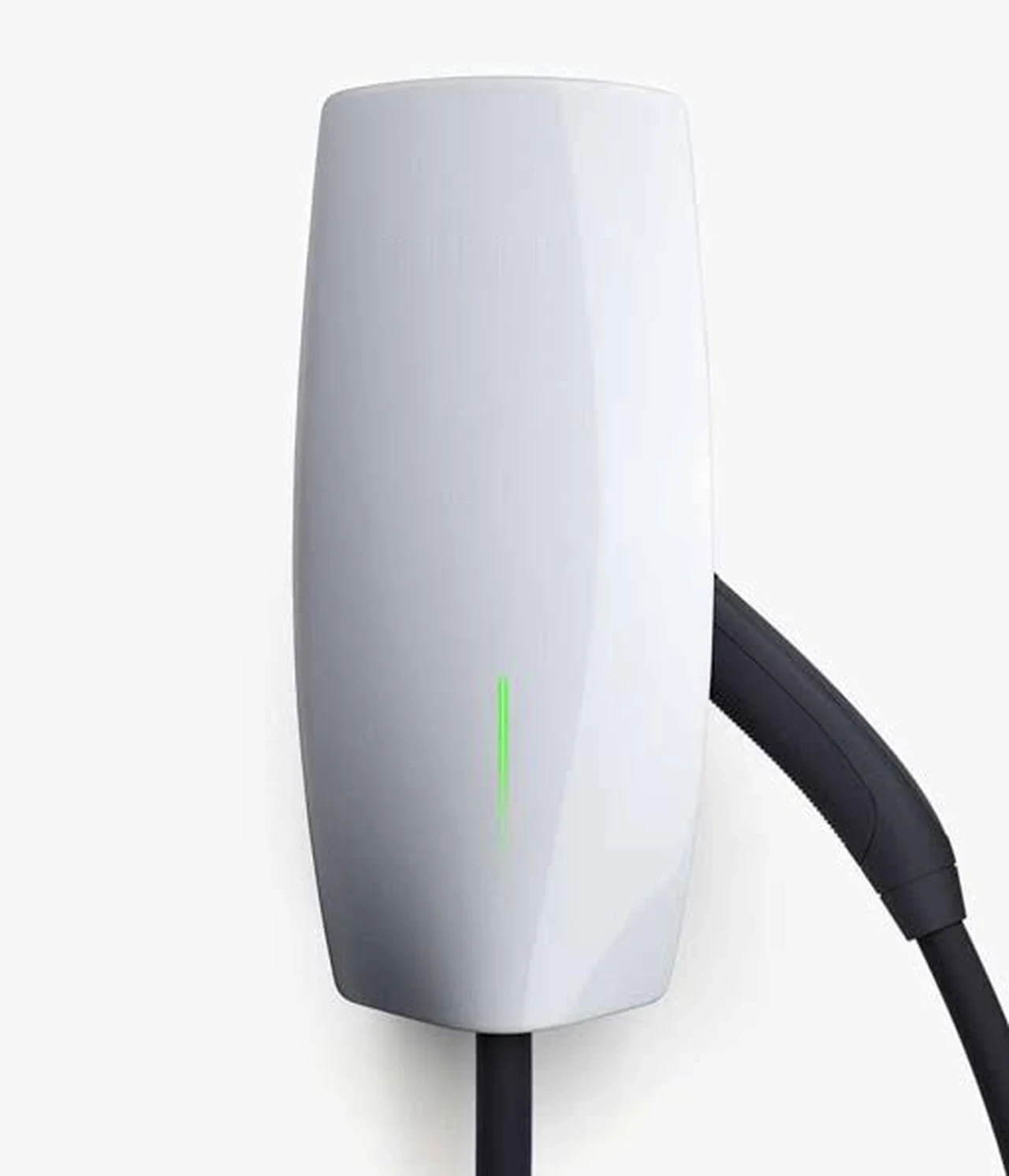
- Level 2 Charging
- RGV Solar Electric LLC
- TECL #37418
Level 2 charging for your home—and your business
A standard household outlet and a Level 2 charger serve different charging routines. Level 2 uses a dedicated higher-capacity electrical circuit to replenish the vehicle more quickly than a standard outlet, subject to the vehicle and the circuit.
Tesla Wall Connector is a Level 2 charger with up to 11.5 kW / 48 A output on a 60 A circuit. For Tesla vehicles, Tesla says it adds up to 44 miles of range per hour of charge. These are Tesla's maximum figures, not a promise for every vehicle or home. Wall Connector can be configured for a lower-amperage circuit to fit an existing electrical system; the installation settings must match the approved circuit.
Universal Wall Connector has the same charging speed and a built-in NACS connector plus J1772, supporting Tesla and non-Tesla EVs. Compare the vehicles you own or expect to charge before selecting equipment. In a two-EV home, multiple Wall Connectors can share one circuit through power sharing. We review the available capacity and charging routine rather than assume that two cars require two unrestricted high-output circuits.
For businesses
For businesses, Tesla's Wall Connector for Business program pairs the business with a Tesla Certified Installer after it orders Wall Connectors through Tesla. The Certified Installer installs and commissions the units; the owner then claims and manages the site in Tesla's portal. Hotels, apartments, offices, restaurants and retail properties should decide whether charging is intended for guests, residents, staff or the public before selecting locations and access arrangements.
The business owner chooses pay-per-use or complimentary charging. Tesla charges $0.03 per kWh on pay-per-use sessions for payment processing and remote troubleshooting. In Texas, pay-per-use is allowed at private and public sites. For a Tesla map listing, the site needs reliable connectivity and Certified Installer commissioning; Tesla makes the final listing decision. These are Tesla program terms, not an installation price or a listing guarantee from RGV Solar. Our commercial Level 2 page also covers other charger brands.
What it costs in the Rio Grande Valley
Installation cost depends on the distance from the panel, required wire size, electrical panel or service capacity, an indoor versus outdoor wiring run and applicable permits. A short garage route is not the same scope as a driveway location across the property. Photos can help start the conversation, but the proposal must reflect the actual circuit route, equipment placement and capacity findings rather than a generic starting price.
For businesses, charger count, pedestals and trenching also affect the installation. Separate the written electrical scope from Tesla's charging program and ongoing payment terms. Confirm who provides connectivity, who claims the site in the portal and which site work is included. We provide one written price after a site review or photos; this guide does not give an installation dollar figure.
From parking location to a commissioned charger
Consultation and photos
Tell us which vehicles you drive, where you park and how you expect to charge. Share ground-level photos of the parking area and accessible panel exterior without opening electrical equipment. For a business, identify intended users, parking duration and whether charging will be paid or complimentary.
Load and panel review
We evaluate electrical loads, service capacity, panel condition and the proposed cable route. A spare breaker position does not establish spare electrical capacity. Discuss power sharing, load management or a service upgrade where appropriate, including future solar or battery plans before the design is finalized.
One-price proposal
Review the charger selection, circuit, mounting location, electrical work and exclusions in one written proposal. A business scope should identify pedestal or trenching work and commissioning responsibilities. Clarify unresolved site conditions and any approval needed before authorizing a change rather than assume it is included.
Permit where required
We coordinate applicable permits for the approved electrical scope. Requirements depend on the property and work proposed. If a service upgrade is needed, utility coordination is part of the planning conversation; charger installation does not automatically imply a new solar interconnection application.
Dedicated circuit and mounting
Our licensed team installs the approved charging circuit and mounts the equipment at the agreed location. Consider how the vehicle parks and how the charging cable reaches it without creating a circulation problem. Homeowners and property staff should not attempt wiring, panel work or electrical commissioning themselves.
Commissioning in the Tesla app
We commission the charger and set its amperage to the approved circuit. For Wall Connector for Business, Certified Installer commissioning is followed by the owner's claim and management of the site in Tesla's portal. Reliable connectivity and Tesla's final decision determine map listing, not a promise in the installation proposal.
Walkthrough and handoff
We explain the charging setup, applicable sharing settings and service contact. Keep the installation documents and relevant Tesla account information under your control. Ask which operating decisions belong to you and which terms belong to Tesla, especially for business payment settings and a proposed network listing.
Garage, driveway and electrical capacity in the Valley
A home in Mission, McAllen, Edinburg or another Valley city may have a full panel without needing the same solution as its neighbor. Review both breaker space and total service capacity. Homes with a full panel may need power sharing, load management or a service upgrade; our electrical panel upgrade and SPAN Smart Panel pages explain related planning options. The charger setting must fit the electrical system, not the other way around.
Solar, Powerwall and PowerShare can be considered alongside charging. Solar can supply the home's charging load when energy is available. Charging during a utility outage requires appropriate Powerwall or backup equipment, a design that supports the charger and available energy; ordinary grid-connected solar or Wall Connector alone is not backup power. PowerShare is a separate compatible vehicle-to-home backup scope, not a feature created by mounting any charger.
Confirm whether AEP Texas, Magic Valley Electric Cooperative or Brownsville PUB serves the property when utility work is relevant. Their service and interconnection requirements should not be assumed interchangeable. Our Mission office and showroom at 2575 E Griffin Pkwy Suite 9 gives homeowners and business owners a local place to discuss equipment and electrical planning; call (956) 507-0514.
A certified installer and a licensed electrical contractor
RGV Solar Electric LLC holds Texas electrical contractor license TECL #37418. We are a Tesla Certified Installer, the only one based in the Rio Grande Valley, and hold SolarEdge, Enphase and FranklinWH certifications. We have serviced and installed more than 400 systems. Those credentials support a local electrical planning conversation; they do not eliminate the need to verify capacity, vehicle compatibility and the scope for your specific address.
Ask who evaluates loads, installs the circuit, commissions the equipment and answers service questions afterward. Keep manufacturer terms separate from the contractor's written installation terms. RGV Solar is independent of Tesla; Tesla controls specifications and commercial program conditions. A certification does not guarantee a particular charging rate, approval, map listing or the same installation requirements at every property.
Choose the connector for the vehicles you charge
| Option | Charges / plug | Maximum output | Best for |
|---|---|---|---|
| Wall Connector | Tesla vehicles / NACS | Up to 11.5 kW / 48 A on a 60 A circuit | Tesla home charging; Tesla business program where suitable |
| Universal Wall Connector | Tesla and non-Tesla EVs / built-in NACS + J1772 | Same speed: up to 11.5 kW / 48 A on a 60 A circuit | Mixed-vehicle homes and commercial sites |
| Other Level 2 brands | Vehicle compatibility and plug vary by equipment | Varies by model, circuit and vehicle | Projects needing another brand or operating arrangement |
Tesla figures are maximums, not a guaranteed result. Actual charging depends on the vehicle, circuit and configuration. Review current Tesla specifications and business terms at the sources below.
What to have ready for the review
Prepare the property address, vehicle connector information, parking location, accessible panel photos and a description of your typical driving and charging routine. Mention a second EV, existing solar, Powerwall, PowerShare plans or another major planned electrical load. Use safe, ground-level photos; do not remove a panel cover or handle wiring to gather information.
For a business, bring a parking layout, proposed charger locations, desired charger count, intended users and connectivity plans. Explain whether access is public or restricted and whether drivers will pay. Before approving work, confirm the cable route, permitting scope, commissioning and ownership of the Tesla portal account. Keep passwords and utility account documents in private channels rather than sharing them in public forms.
Questions Valley homeowners ask
Related services and guides
Reviewed by Isai Rodriguez, owner, RGV Solar Electric LLC (TECL #37418)
Last updated:
Tesla, Powerwall, Wall Connector, Supercharger and PowerShare are trademarks of Tesla, Inc. RGV Solar Electric LLC is an independent Tesla Certified Installer.