
When Your Solar Installer Is Out of Business
RGV Solar services, repairs, removes, and reinstalls systems installed by other solar companies across the Rio Grande Valley.
- Existing Solar Systems
- TECL #37418
- Roof and solar under one contractor
Understanding your options
Start by separating three questions: who owns the system, whether it is producing electricity, and who can authorize service. A financed purchase, lease, or power agreement can involve different rights and responsibilities. Find the actual contracts rather than assuming the company that sold the system also owns the equipment or services the loan. An installer closing does not by itself cancel a financing contract, transfer ownership, or establish that equipment has failed.
A missing app connection and a loss of generation are different problems. Monitoring can stop reporting after an internet change or account-access issue while equipment continues operating. Conversely, a visible dashboard does not establish that every component is functioning correctly. A professional assessment compares available production history, equipment information, site conditions, and appropriately obtained electrical measurements before recommending repairs. Your electricity bill alone cannot establish the cause of a change.
Manufacturer support also needs a separate review. Equipment identity, serial numbers, registration, ownership, installation records, and the manufacturer's current claim requirements can affect eligibility. An installer disappearing does not automatically activate manufacturer coverage, and an equipment claim does not necessarily include diagnosis, labor, shipping, or roof work. RGV Solar can help organize the technical information and explain the proposed service scope without promising approval or replacement-part availability.
What it costs in the Rio Grande Valley
The first useful estimate defines the assessment: which equipment will be reviewed, whether monitoring access is included, and what documentation you will receive. Subsequent repair pricing depends on the findings, access, electrical condition, compatible equipment, and any manufacturer decision. Ask that investigative work and corrective work be distinguished so you know what you are authorizing before additional expenses are incurred.
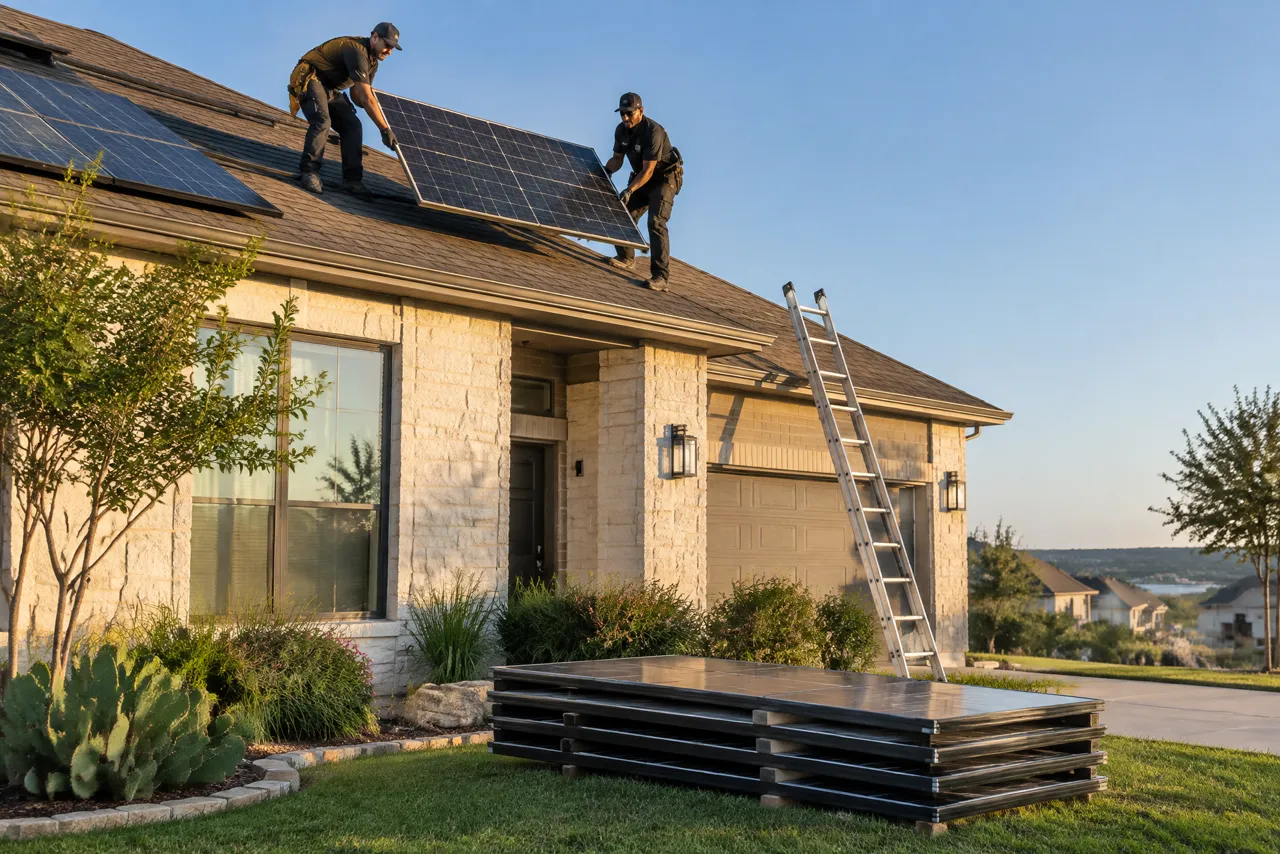
If roof work requires removal, detach and reinstall starts at $230 per panel; that is not a general solar-repair rate. The final scope depends on the array, roof, access, and hardware condition. Keep financing payments, service invoices, manufacturer claims, and insurance decisions in separate records. Neither a service proposal nor an insurance submission changes your loan terms, and a lender or insurer must answer questions about its own contract.
A practical project plan
Establish ownership and authority
Gather the purchase, loan, lease, or power agreement and identify the current owner. If another party owns the equipment, confirm who may approve an inspection or alteration before work is scheduled. Record the lender or servicing contact separately from the original installer's contact information.
Collect the system record
Find the installation proposal, equipment list, permits, utility authorization, prior repair invoices, and available production exports. Missing records do not prove the system is unserviceable, but they affect what must be verified. Note recent roof work, outages, internet changes, and the date the problem first became apparent.
Arrange a safe assessment
Describe app alerts and observable changes without attempting electrical troubleshooting yourself. The technician should distinguish a communication interruption from lost production and document relevant findings. Do not climb onto the roof, open an inverter, or operate disconnects as a substitute for a professional inspection.
Review claim eligibility
Ask which manufacturer requirements apply to the identified equipment and who will submit supporting information. Request a clear distinction between a possible equipment benefit and separately billed labor or related work. Wait for an actual eligibility determination rather than treating a brand name or certification as a coverage promise.
Choose a documented service scope
Compare repair, monitoring restoration, and any proposed replacement using the same stated problem and evidence. A battery upgrade is a separate design decision, not an automatic remedy for an unavailable installer. Confirm compatibility, necessary approvals, and costs before accepting changes to the original system.
Coordinate any roof access
When removal is needed, the crew inspects production, performs safe shutdown, and labels equipment for protected storage before roof work. Reinstallation uses new flashing and mounts as appropriate and BRAND-NEW electrical wire, never reused wire. A production test follows; the sequence belongs in the written scope.
Close out with usable records
Obtain the findings, work description, test results, and any claim correspondence. Confirm legitimate monitoring access and the contact path for later concerns. Keep unresolved issues identified rather than treating a working app or a submitted claim as proof that all service questions are finished.
Rio Grande Valley specifics
RGV Solar serves Hidalgo, Cameron, Starr, and Willacy counties, including Mission, McAllen, Edinburg, Harlingen, and Brownsville. Valley heat, changing cloud cover, and seasonal daylight affect production comparisons. A technician needs comparable operating periods and weather context, not an assumption that a summer bill or an isolated storm proves a specific equipment failure.
Hurricanes and outages can create several overlapping issues, including roof damage, utility interruptions, and monitoring loss. Service planning depends on safe access, electrical conditions, and the work actually required; no immediate-response promise should be inferred. Stay away from damaged wiring or displaced equipment and describe visible concerns from a safe location when requesting help. AEP Texas, Magic Valley Electric Cooperative and Brownsville PUB have different requirements. Confirm the utility serving your address before changing grid-connected equipment or service; routine like-for-like service does not automatically mean a new solar application.
If the solution includes roof work in Cameron or Willacy County, address-specific coastal windstorm requirements must be reviewed before work is covered. Applicable Texas Department of Insurance inspections require coordination at the correct construction stage. Do not assume every property has identical requirements or that a completed roof can always be documented the same way afterward.
Why a licensed electrical contractor
RGV Solar Electric LLC holds Texas electrical contractor license TECL #37418 and has serviced and installed more than 400 systems. The team is certified with Tesla, SolarEdge, Enphase, and FranklinWH and services equipment including SolarEdge, Enphase, SMA, and Tesla systems installed by other companies. Certification does not determine the warranty status of your particular equipment.
Roofing and solar work are handled in-house when both are included. Ask the proposal to identify responsibilities, exclusions, and applicable workmanship terms. The three-year workmanship warranty applies only to RGV Solar detach/reinstall work; it is not a roof warranty, a general service warranty, or a replacement for manufacturer terms. A roofer who is not a licensed electrician must not handle the solar electrical components; coordinate that work through the licensed electrical contractor.
Prepare for an assessment
Prepare a short timeline with the last known normal operation, alert dates, and any changes to your internet, roof, or electrical service. Save screenshots showing dates and the displayed message. Ground-level photos of accessible equipment labels can help if safely obtainable, but there is no need to enter a restricted area or expose electrical components to gather them.
Share contracts and account records through a private, agreed channel with unnecessary personal information removed. Never put utility account numbers or passwords in public forms or posts. For monitoring transfers, ask for the platform's authorized access process rather than sharing credentials casually, and keep copies of the permissions and documents you provide. At our Mission showroom, you can see Powerwall, batteries and chargers and discuss future options without committing to an upgrade. Our Mission location also hosts Tesla demo drives; scheduling is through Tesla’s official drive page, separately from solar service.
Questions Valley homeowners ask
Related services and guides
Service in your city
Hidalgo County
Cameron County
Willacy County
Starr County
Reviewed by Isai Rodriguez, owner, RGV Solar Electric LLC (TECL #37418)
Last updated: