
Roof Replacement in the Rio Grande Valley
RGV Solar replaces shingle roofs on Rio Grande Valley homes. When solar panels are on the roof, our own licensed crew removes them before the roof work and reinstalls them after, so one contractor is responsible for both.
- Roofing
- RGV Solar Electric LLC
- TECL #37418
Understanding your options
Roof replacement should begin with an inspection that distinguishes a repairable local issue from broader deterioration. Water visible indoors may travel from its entry point, so a ceiling stain alone does not identify the required roof work. Review the roof covering, transitions, penetrations, drainage conditions, and accessible evidence together. Ask why replacement is recommended and which findings support that recommendation rather than relying on appearance from the street.
The replacement scope should explain removal of the old covering, inspection of decking after tear-off, underlayment, shingles, flashing, and cleanup. Some concealed conditions cannot be confirmed until materials are removed. The contract should establish how those findings will be documented and authorized, not suggest that an initial visual review reveals everything. Decking condition matters because the new covering needs an appropriate underlying surface and attachments.
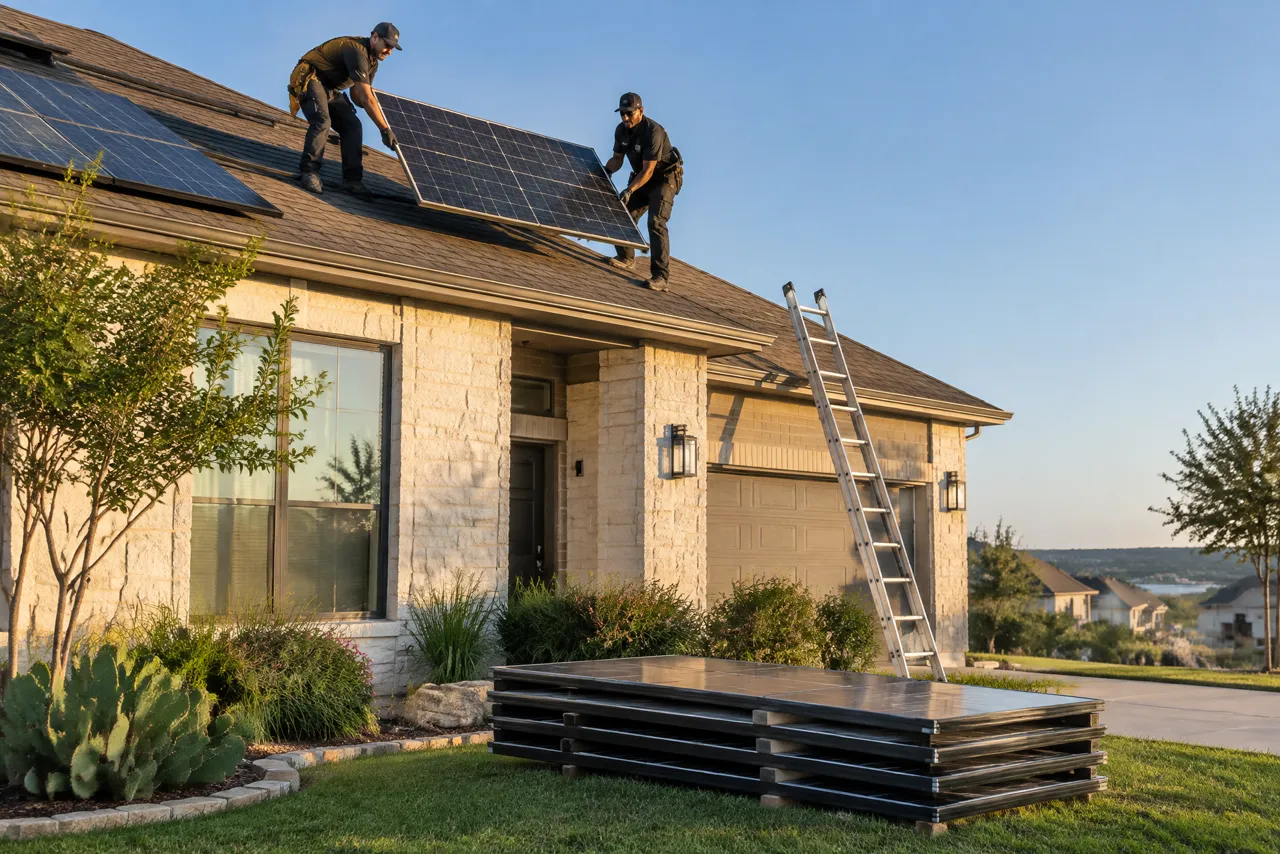
Existing solar introduces electrical and scheduling responsibilities as well as roof access. Panels and associated attachments must be coordinated with the roofing work so the underlying roof can be addressed appropriately. RGV Solar handles both disciplines in-house when included, but the written proposal still needs to distinguish roof replacement, solar removal and reinstallation, any repairs to existing equipment, and the terms that apply to each portion.
What it costs in the Rio Grande Valley
The roof estimator is a preliminary planning tool for shingle roofing, not a final site quote. Roof area is not the same as interior living area: roof shape, slope, overhangs, and different roof planes affect the surface being replaced. The final scope depends on measured roof area, access, stories, tear-off, decking findings, materials, flashing, and project-specific requirements. Do not substitute a home's advertised living area for an actual roof measurement.
Metal, tile, flat, and other roof types require an on-site review and quote rather than an online shingle estimate. Where solar removal is needed, detach/reinstall starts at $230 per panel, with final scope based on the array, roof, access, and hardware condition. Insurance coverage and payment remain policy-specific decisions; a contractor's estimate documents proposed work but does not guarantee claim approval, deductible treatment, or payment.
Instant estimate
Roof Replacement Estimator
Roof size in squares
Measure by
Stories
Helps our crew prepare. Does not change this estimate.
Material
Are there solar panels on the roof?
A practical project plan
Inspect before choosing the scope
Arrange a professional review of roof condition and the reported concern. Provide leak locations, storm history, prior repairs, and any available roof records. Ask which observations support repair or replacement, and identify areas that cannot be assessed fully until safe access or removal makes them visible.
Measure the actual roof
Confirm the material and measured roof surface, including relevant slopes and sections rather than just living area. Review access, stories, staging space, penetrations, and areas affected by solar. These details should inform the scope so two proposals can be compared on the same physical work.
Plan applicable approvals early
Review local permitting and address-specific coastal windstorm requirements before work starts. In Cameron or Willacy County, coordinate applicable Texas Department of Insurance inspection stages before relevant work is covered. Do not assume all properties have the same requirements or that construction documentation can always be obtained after completion.
Establish the solar baseline
If panels are present, inspect production and record relevant existing conditions before removal. A licensed crew performs safe shutdown and labels panels and equipment for protected storage. Identify storage location, equipment responsibilities, and any existing service concerns separately so roof work is not mistaken for a promise to repair unrelated faults.
Complete roofing with documented decisions
Remove the old covering, check decking, and document concealed damage before authorized additional work. Complete the agreed underlayment, shingle, flashing, and related details while coordinating applicable inspections. Define cleanup and material handling, and keep the homeowner informed about decisions that change the original scope.
Reinstall solar with the specified materials
After the roof is ready, reinstall using new flashing and mounts as appropriate and BRAND-NEW electrical wire, never reused wire. Coordinate attachments and roof details rather than treating electrical work as an afterthought. Perform a production test and record the outcome, including any separate existing equipment issues.
Review completion and records
Walk through the completed scope, cleanup, documentation, and any unresolved items with the project team. Keep roof material information, applicable inspection records, solar test results, and written warranty terms together. Confirm the correct service contact and distinguish roof concerns from monitoring or equipment concerns when reporting a future issue.
Rio Grande Valley specifics
Across Hidalgo, Cameron, Starr, and Willacy counties, heat, heavy rain, and hurricane exposure make planning roof details important. Material selection alone does not replace attention to decking, flashing, attachments, and the full agreed system. RGV Solar serves Valley communities including Mission, McAllen, Edinburg, Harlingen, and Brownsville, with project needs determined by the actual property rather than city-level assumptions.
Coastal windstorm requirements deserve early attention when applicable, especially for projects in Cameron and Willacy. Review the address and proposed work with the appropriate professionals before covering construction. Applicable TDI inspection coordination must fit the construction sequence. This is an address-specific review, not a claim that every building requires the same certification or inspection process. AEP Texas, Magic Valley Electric Cooperative and Brownsville PUB have different requirements. Confirm the utility serving your address before changing grid-connected equipment or service; routine like-for-like service does not automatically mean a new solar application.
Storm-related projects also require realistic access and scheduling discussions. Roof condition, weather, inspection coordination, and solar work can affect how the project is organized. Hurricane exposure does not imply an instant-response guarantee. Stay away from damaged roofing and electrical equipment, and document concerns from a safe place while arranging appropriate help for immediate hazards.
Why a licensed electrical contractor
RGV Solar Electric LLC holds Texas electrical contractor license TECL #37418, and the company handles roofing and solar in-house. The team has serviced and installed more than 400 solar systems and holds Tesla, SolarEdge, Enphase, and FranklinWH certifications. Electrical licensing and equipment credentials do not substitute for reviewing the actual roofing scope and project-specific approvals.
The written agreement should identify workmanship terms for each service without blending them together. The three-year workmanship warranty applies only to RGV Solar detach/reinstall work, not roof replacement or other solar services. Manufacturer equipment eligibility, roofing material terms, and insurance decisions are separate matters that must be verified under their own documents. A roofer who is not a licensed electrician must not handle the solar electrical components; coordinate that work through the licensed electrical contractor.
Prepare for an assessment
Gather prior roof estimates, repair records, leak photographs taken safely indoors or from the ground, material information, and any insurance correspondence. If solar is installed, provide panel count if known, equipment brand, production history, and existing alerts. Do not climb onto the roof or open electrical equipment to collect details for the initial conversation.
Discuss driveway access, pets, landscaping, vehicle locations, protected storage for solar equipment, and how construction updates will be shared. Ask how concealed decking issues and change approvals will be handled. If using insurance, keep the claim and policy questions with your insurer while retaining the contractor's itemized scope for documentation; do not assume every proposed item is covered. At our Mission showroom, you can see Powerwall, batteries and chargers and discuss future options without committing to an upgrade. Our Mission location also hosts Tesla demo drives; scheduling is through Tesla’s official drive page, separately from solar service.
Questions Valley homeowners ask
Related services and guides
Service in your city
Hidalgo County
Cameron County
Willacy County
Starr County
Reviewed by Isai Rodriguez, owner, RGV Solar Electric LLC (TECL #37418)
Last updated: