
Solar Panel Detach & Reinstall in the Rio Grande Valley
A licensed electrical contractor that also does the roof.
- TECL #37418
- Tesla Certified
- Any brand
- Roof and solar under one contractor

Planning complete removal and return to service
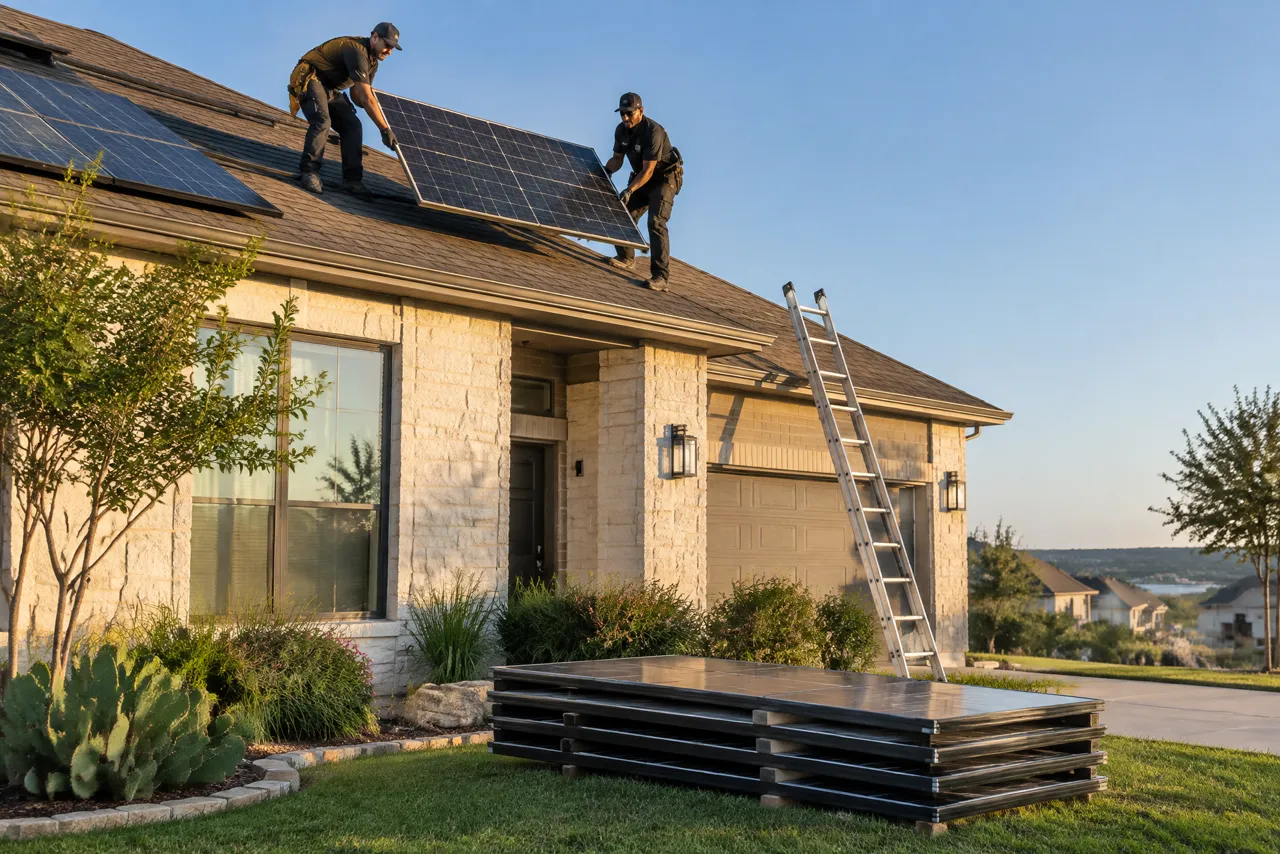
Detach and reset, solar R&R, and removal and reinstallation describe the service that clears a roof for work and restores the solar system afterward. It is not simply moving panels aside. Plan shutdown, storage, roof access, attachments, new electrical wire, and production testing together before removal begins.
The roofer is not a licensed electrician and must not touch solar electrical components. The roofing crew should not disconnect equipment, move energized components, or improvise electrical changes to keep the roof job moving. If solar equipment blocks the planned work, pause that affected activity and have the licensed electrical contractor resolve the access issue.
Agree on the handoff conditions rather than relying only on dates. The roofing contractor should communicate changes in roof materials, discovered decking problems, and readiness for attachments. The solar contractor should confirm when the area is released for roofing and when reinstallation can proceed. Homeowners should receive updates when those conditions change.
What it costs in the Rio Grande Valley
RGV Solar detach and reinstall starts at $230 per panel; final pricing follows site review. The proposal considers panel count, roof type and height, system and mounting condition, and whether RGV Solar also performs the roof work. A roofer’s allowance or a preliminary solar estimate should not be treated as the final reviewed agreement.
Ask who is contracting for the solar work and who approves changes. The written scope should address protected storage, access, attachment preparation, brand-new electrical wire, commissioning, and documentation. If the roof or equipment scope changes, ask for the effect to be explained before authorizing it, especially when a separate insurance claim or roofing contract is involved.
Instant estimate
Detach & Reinstall Estimator
Number of panels
Stories
Helps our crew prepare. Does not change this estimate.
Roof type
Helps our crew prepare. Does not change this estimate.
Inverter brand
Helps our crew prepare. Does not change this estimate.
Do you also need the roof replaced?
Detach and reinstall process
Inspect and test before removal
The licensed team inspects the existing system and performs a production test before removal. Record available operating information and visible concerns so existing problems are distinguished from later findings. Share monitoring records if available, but do not climb onto the roof to obtain equipment details.
Shut down professionally
The licensed electrical contractor shuts down the installed system using appropriate professional procedures. Identify batteries and backup equipment during planning. A utility outage does not make solar equipment safe to handle, and a roofer or homeowner must not attempt electrical disconnection.
Remove and store labeled equipment
The team removes equipment and labels it for protected storage and organized reinstallation. Agree on the storage location and access before work begins. Keep children, vehicles, pets, and other trades away from stored panels, and document visible damage before equipment is moved.
Complete the roof work
The roofing contractor proceeds after the electrical team releases the affected area. Communicate changes in decking, roof materials, access, or schedule to the solar contractor. Confirm the roof is ready before reinstalling rather than relying on the originally proposed calendar.
Prepare flashing and mounts
Evaluate the roof attachments and install new flashing and mounts as appropriate for the completed roof and existing system. Discuss discovered conditions before covering the work. Homeowners should not select attachment hardware, drill the roof, or attempt to resolve mounting concerns themselves.
Reinstall with brand-new electrical wire
RGV Solar reinstalls with brand-new electrical wire and never reuses the old electrical wire. Evaluate panels and other equipment separately for continued use. Explain proposed equipment changes and obtain approval instead of assuming they are part of the originally authorized detach and reinstall.
Commission and test production
The licensed team commissions the system and tests production after reinstallation. Compare the findings with the pre-removal record while considering weather and operating conditions. Ask for explanations of alerts or unresolved concerns rather than assuming that a dashboard alone proves everything is working correctly.
Document completion and warranty
Keep the completed scope and production-test information with the roofing records. The 3-year RGV Solar workmanship warranty covers only our detach/reinstall work, not equipment or roofs. Confirm how to report concerns and distinguish the solar contractor’s responsibilities from those of the roofing contractor.
Rio Grande Valley specifics
RGV Solar serves detach and reinstall projects across Hidalgo, Cameron, Starr, and Willacy counties. Give the team the property address and explain the roof work that requires access beneath the array. Local planning should connect the roof scope with electrical responsibilities, not turn a roof project into unrelated solar troubleshooting.
Confirm whether the proposed scope changes interconnection or equipment configuration with AEP Texas, MVEC, or Brownsville PUB, as applicable to the address. Not every removal requires a new application. For roof work in Cameron or Willacy, review address-specific coastal windstorm requirements and applicable Texas Department of Insurance inspections before covering the work.
The Mission showroom has Powerwall batteries and chargers on display, and Mission is also a demo-drive location. Use the official scheduler to arrange a demo drive. A showroom visit is separate from a roof assessment: bring questions about removal and return to service, without substituting the visit for property review.
Why a licensed electrical contractor
RGV Solar Electric LLC holds TECL #37418 and has serviced and installed more than 400 systems. The team holds Tesla, SolarEdge, Enphase, and FranklinWH certifications and services SolarEdge, Enphase, SMA, and Tesla equipment, including other installers' systems. These qualifications support the service conversation but do not establish a diagnosis, equipment coverage, or part availability. A roofer who is not a licensed electrician must not touch solar electrical components; roofing experience does not authorize electrical disconnection.
In-house roofing and solar capability can simplify responsibility when safe roof access or roofing repairs are part of the project. Written terms still matter: identify which work is included and which warranty applies. The three-year workmanship warranty is limited to RGV Solar detach/reinstall work, not all repairs, manufacturer equipment, or roof replacement.
Compare responsibilities, not just prices
| Approach | Appropriate role | Boundary to clarify |
|---|---|---|
| DIY | Collect records and ground-level photographs. | Do not disconnect wiring, move panels, or open equipment. |
| Roofer | Perform roof work after the affected area is released. | Unless licensed as an electrician, must not touch solar electrical components. |
| Licensed electrical contractor | Coordinate shutdown, electrical removal, reinstallation, and testing. | Ask the written scope to identify storage, new wire, and handover. |
This comparison defines roles; it is not a quote or authorization for DIY electrical work.
Prepare for an assessment
Start with the reason for removal and identify whether the project affects the whole array or only the area above the roof work. Share the roof proposal and available equipment records. Explain whether you expect the existing layout to return unchanged or want to discuss a separate alteration; those are different scope decisions, not interchangeable descriptions of a detach and reinstall.
Choose a contact for each trade and discuss storage before equipment leaves the roof. Ask how panels will be identified and protected while the roof is open for work. Mention access restrictions, pets, and areas needed for deliveries. Use ground-level photographs and existing records rather than handling equipment to prepare for the assessment.
Keep the pre-removal findings, agreed scope, and reinstallation records together. Ask how an existing equipment fault would be distinguished from damage found during handling or roof work. Confirm who can approve a change and how it will be documented. At handover, request an explanation of the production testing and any unresolved findings instead of treating physical reinstallation alone as completion.
Questions Valley homeowners ask
Related services and guides
Service in your city
Hidalgo County
Cameron County
Willacy County
Starr County
Reviewed by Isai Rodriguez, owner, RGV Solar Electric LLC (TECL #37418)
Last updated: